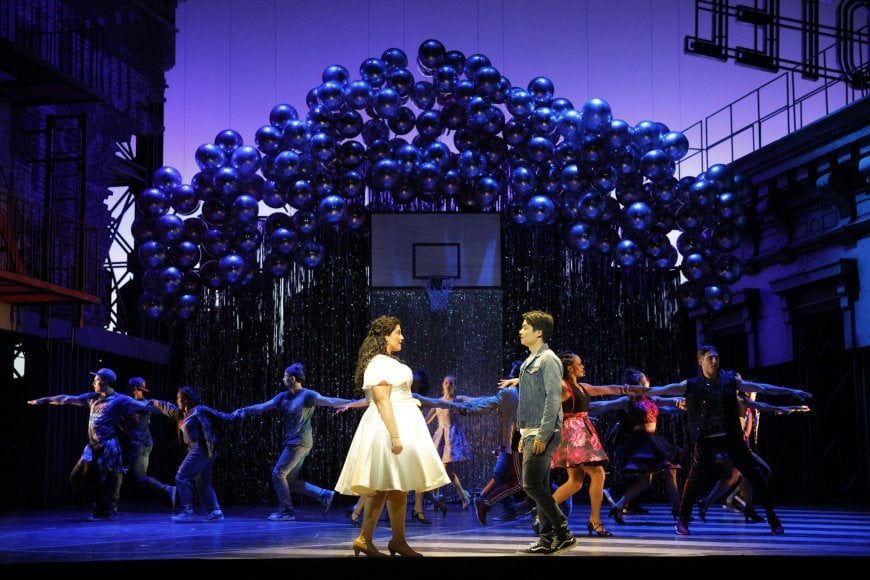
On Saturday, September 27, the Dorothy Chandler Pavilion once again came alive with the sounds of Leonard Bernstein’s West Side Story, as Maestro James Conlon led LA Opera in a full operatic rendering of the beloved work. What emerged was more than homage; it was proof that a true masterpiece endures any adaptation, transcending genre to reaffirm why opera remains timeless, universal, and profoundly human.
As is my tradition on LA Opera nights, I began with the pre-performance lecture, given by Conlon himself and sponsored by the Opera League’s Founders Legacy Initiative. A three-time Grammy Award winner and recipient of France’s Légion d’Honneur, Conlon brought his characteristic blend of scholarship and warmth to an hour-long masterclass. He traced the work’s genesis to 1949, when Jerome Robbins first imagined a modern Romeo and Juliet set against a religious divide — “East Side Story,” with Catholic and Jewish youth at odds. That concept faltered, but in 1955, at a Beverly Hills luncheon coinciding with Bernstein’s birthday, the vision shifted. The rivalry became one between white American street gangs and newly arrived Puerto Rican immigrants on New York’s West Side. The change proved musically pivotal, allowing Bernstein to weave jazz, blues, and Broadway idioms with Latin American rhythms — a soundscape at once eclectic and wholly his own, and one that resonates powerfully in an operatic context.
“In LA Opera’s West Side Story, Bernstein’s score soars with operatic intensity, while voices and movement fuse into a performance both faithful and sublime.”
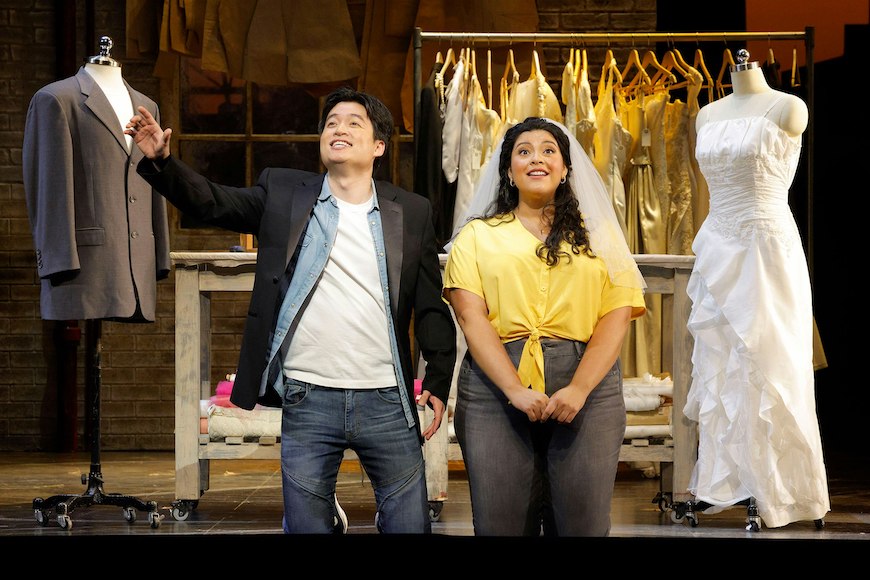
In this operatic adaptation, tenor Duke Kim as Tony and soprano Gabriella Reyes as Maria gave the central love story both innocence and fire. When Kim stepped forward with “Something’s Coming,” his boyish charm and ringing tenor captured the naiveté of first love while hinting at its tragic urgency. Reyes, luminous and effervescent, joined him in “Tonight,” their voices entwining with a chemistry so natural that the audience could not help but yearn — against all knowledge of the ending — for a happier fate than Shakespeare ever allowed.
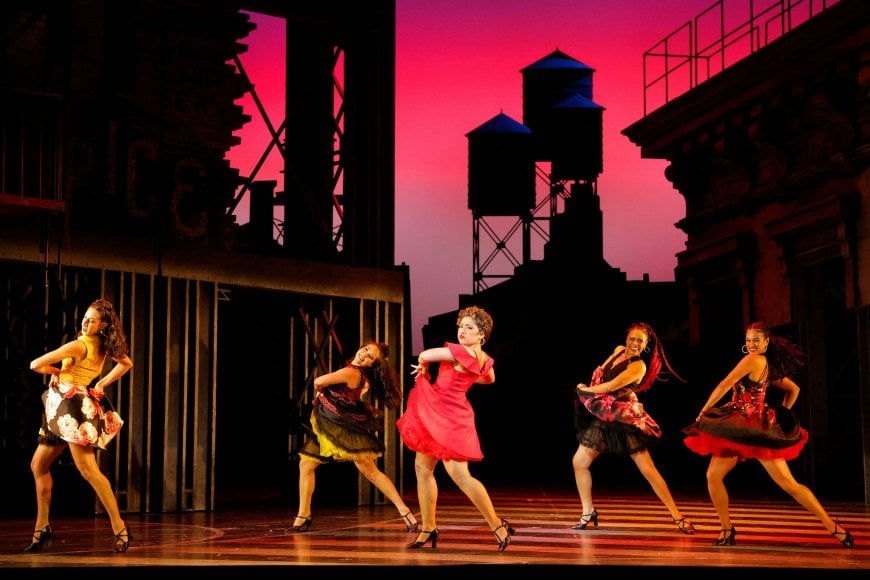
The supporting cast added dimension and electricity. Daniella Castoria’s Anita was fiercely charismatic; Taylor Harley’s Riff brought swagger and edge; Yurel Echezarreta’s Bernardo embodied pride and volatility. Each performance heightened the inevitability of the lovers’ tragedy, while the ensemble’s precision and vitality made nearly three hours feel fleet. Especially noteworthy was how each principal navigated the dual demands of operatic vocalism and physically rigorous staging. Balancing athletic movement with sustained vocal power is no small feat, and here, it was done with confidence and grace.
Visually, the production retained the spirit of Jerome Robbins’ original choreography, whose angular lines and kinetic group numbers continue to thrill decades later. Staging choices, while faithful in many respects, allowed the narrative’s tension and heartbreak to unfold with clarity—elevating emotion without overpowering it. There’s a deep pleasure in watching a production that honors tradition without becoming calcified by it.
At the close, the ovation was thunderous and unrelenting — a tribute not only to the cast but to Maestro Conlon, who celebrates his 20th anniversary with LA Opera this season. As he prepares to step down as Music Director at the end of 2025–26 and assume the title of Conductor Laureate, the performance felt like both a celebration of his legacy and a promise of his enduring presence. It was a night that reminded us of opera’s power: to transform the familiar into the sublime, to bridge genres, and to leave us haunted long after the final note.
— Rosane Grimberg
“Westside Story” at the LA Opera runs through October 12th. Approximate run time of two hours and 30 minutes, including one intermission. For more information please visit: https://laopera.org/whats-on
 indulge