
There are nights in Los Angeles when the air feels charged with more than stars—when it shimmers with something timeless. On Thursday, June 26, that shimmer took form in Boston Ballet’s Swan Lake at the Dorothy Chandler Pavilion, part of Glorya Kaufman Presents Dance at The Music Center. What unfolded was less a performance than a dream set to motion—ethereal, aching, and exquisitely alive.
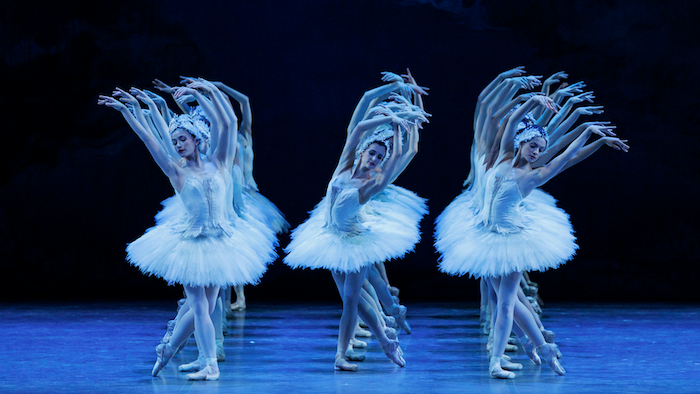
Rooted in the 1877 Bolshoi premiere, Swan Lake tells of Odette, a princess cursed to live as a swan by day, and Prince Siegfried, whose love might save her—until deception strikes in the form of Odile, the sorcerer’s daughter in disguise. Under Mikko Nissinen’s direction, this production honored tradition while infusing it with rare emotional clarity.
“Boston Ballet’s Swan Lake casts a spell of aching beauty—an exquisite dream suspended between music and moonlight.”
From the first downbeat, conductor Mischa Santora led the orchestra with passionate precision. Tchaikovsky’s score pulsed like a living thing, not merely accompanying the dancers but animating them. As both Odette and Odile, Victorina Kapitonova gave a breathtaking dual performance. Her Odette was soft and spectral, almost weightless, while her Odile blazed with seductive power. Her fouettés were dazzling, but it was the storytelling in her body—tender, fierce, precise—that made her unforgettable. Opposite her, Sangmin Lee’s Siegfried was noble and nuanced. His lines were clean, his presence heartfelt, and his connection with Kapitonova electric. As Von Rothbart, Lasha Khozashvili offered menace without melodrama—his villainy whispered rather than shouted, and it was all the more chilling for it.
One moment silenced the house: a soft mist drifted past the curtains and spilled into the orchestra pit. Then, through the fog, the swans appeared—serene, endless, spectral. The corps de ballet moved with otherworldly unity, transforming into virtual swans. In their stillness was a kind of prayer. Robert Perdziola’s icy, elegant costumes and Mark Stanley’s moonlit lighting created a palette of restraint and reverence. Nothing screamed for attention; everything whispered beauty.
Boston Ballet’s Swan Lake didn’t seek reinvention—it sought remembrance. And in doing so, it reminded us of ballet’s power to mesmerize not through excess, but through elegance. For one enchanted night, we believed in swans, in sorrow, and in something more than real.
— Rosane Grimberg
For more information visit musiccenter.org.
 indulge