Last Friday, after a 14-year absence, Brazil’s acclaimed dance company Grupo Corpo returned to Los Angeles, setting the Ahmanson Theatre ablaze with color, rhythm, and spirit. Presented as part of the 2025 Glorya Kaufman Dance Season, the evening was more than a performance—it was a celebration of movement as cultural memory, blending classical precision with the exuberance of Brazil’s folkloric and spiritual traditions.

The program opened with 21, a 1992 work choreographed by Rodrigo Pederneiras. Structured around the number itself, the piece unfolded in three movements, each guided by Marco Antônio Guimarães’s minimalist score. Dancers in yellow moved with the mechanical grace of clockwork against a brilliant blue backdrop, evoking the geometry of time. When a lone dancer in green stepped forward, the palette subtly invoked the Brazilian flag.
“Dance can be both deeply rooted and boldly contemporary, sacred and sensual, precise and wild. (This) was a gift.”
What followed was a stunning evolution: the backdrop burst into a kaleidoscope of patterns and flowers as the dancers, in a breathtaking blur of limbs and rhythm, fused ballet’s refinement with the audacity of Brazilian folk dance. Bodies entwined and propelled across the stage with astonishing speed and grace, culminating in a kinetic finale that felt like a national celebration distilled into movement.
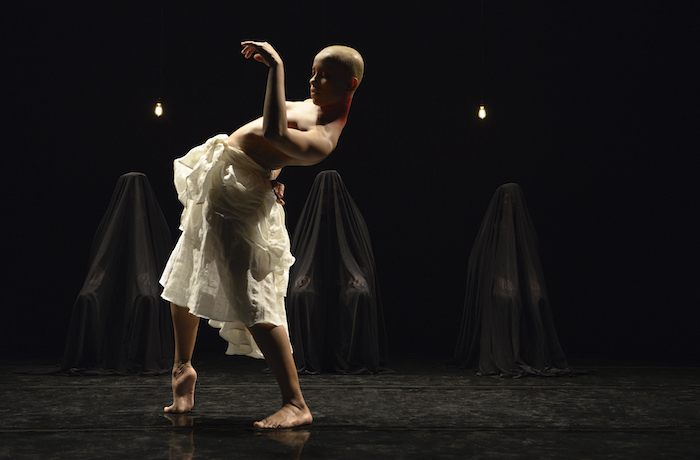
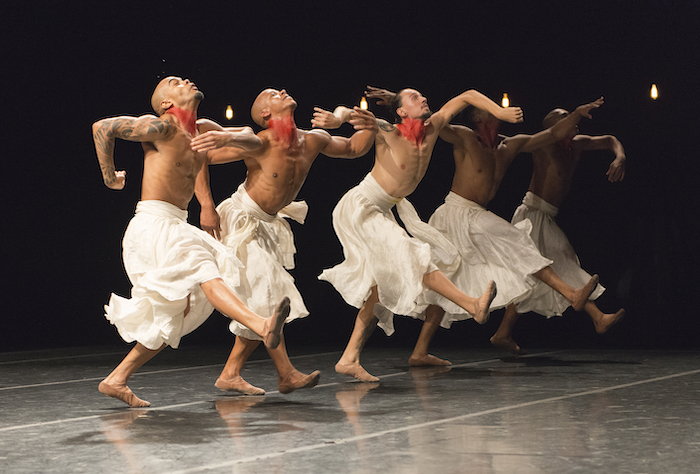
After intermission came Gira (2017), a visceral homage to the Afro-Brazilian religious rituals of Umbanda. Once again choreographed by Pederneiras, this piece delved into the spiritual, drawing on the symbolic gestures and circular trance of Candomblé ceremonies. Set to a score by the Brazilian experimental group MetáMetá, Gira pulsed with primal energy, as if conjuring sacred forces through motion. Freusa Zechmeister’s flowing costumes added an ethereal texture, their soft drift amplifying the work’s meditative intensity.
Having seen Grupo Corpo perform in Brazil, I knew what to expect—but nothing prepared me for the thrill of experiencing them again on an American stage. Their choreography doesn’t merely engage the body—it electrifies it, using every sinew in ways that reimagine the very notion of ballet. They remind us that dance can be both deeply rooted and boldly contemporary, sacred and sensual, precise and wild. For dance lovers, it was a gift.
— Rosane Grimberg
For more information on performances at the Music Center visit https://www.musiccenter.org/
 indulge