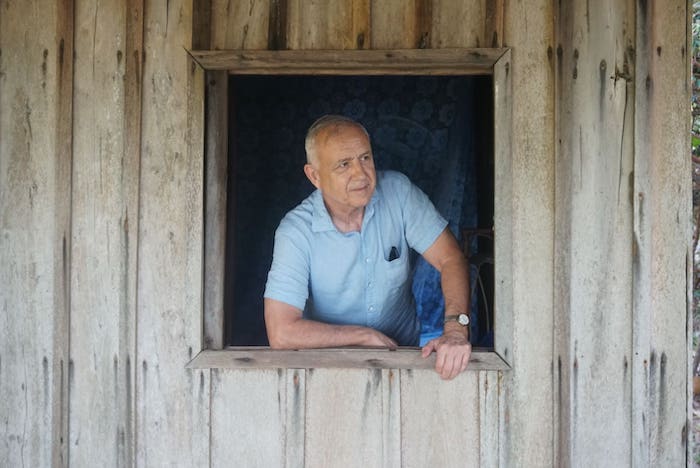
Weatherford, the celebrated historian and author, brings his unparalleled expertise to explore the life and legacy of Kublai Khan in “Emperor of the Seas: Kublai Khan and the Making of China.” In this insightful Q&A, he delves into the Mongol ruler’s transformative shift from land to sea power and the lessons his reign holds for the modern world.
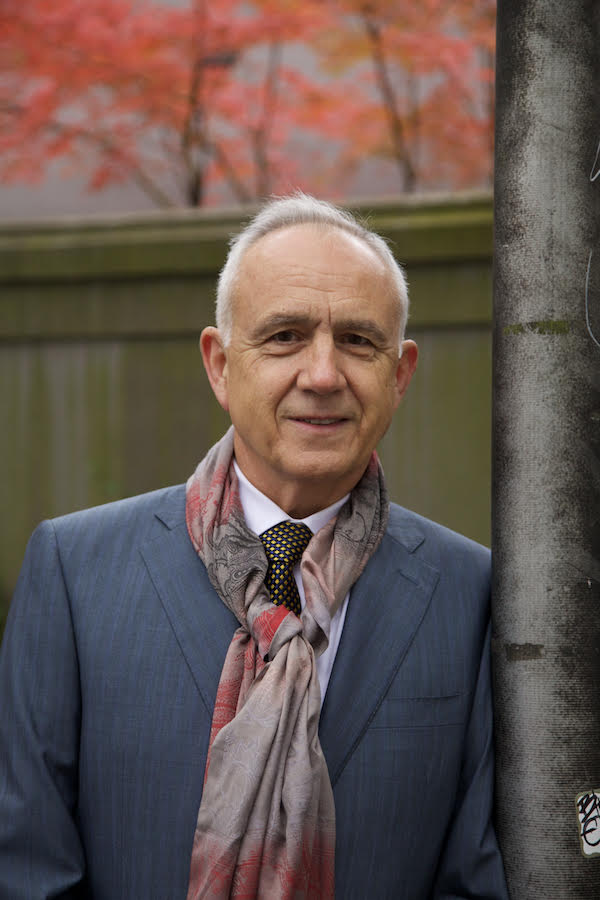
Q: Why is a man of the thirteenth century such as Kublai Khan important in the modern world of the twenty-first century?
A: Genghis Khan built the greatest land power in history, but by the time his grandson Kublai Khan established his Yuan dynasty in China in 1279, the Mongols unexpectedly controlled the most powerful navy in the world. At first, Kublai tired to use the navy to invade independent countries, including Japan, Vietnam, and Java. These invasions failed, but they left Kublai in control of the sea routes all the way to the Persian Gulf, with connections on to Mogadishu in Somalia and Egypt on the Red Sea. For over two centuries, China was the most power maritime power in the world.
Now after a six-century absence, China is again turning to the sea for commercial as well as well as defensive strategies. This new development after centuries of western domination has struck fear and consternation on many fronts, but China was there first. Now, there is much the world can learn about China and the sea from the life of Kublai Khan, the emperor who moved history from the land to the sea.
Q: Who is this man, Kublai really? We know more about his famous grandfather Genghis Khan the conqueror, but most of what we know of Kublai is from his later life as described by Marco Polo.
A: Unlike his grandfather, Kublai was born and raised as a prince, but there was no indication he would ever become the Great Khan of the Mongol Empire, much less the Emperor of China. Kublai was the second son of the fourth son of Genghis Khan. Unlike his older brother and numerous cousins who were great Mongol horsemen and warriors, Kublai was slightly more cerebral, interested in religious debates with his tutors and in good food. At most, he seemed destined to be a bureaucrat helping to administer the empire rather than ruling it.
The era of great Mongol conquests, however, was coming to an end. Their horses had reached as far as they could on the open grasslands from Korea to Hungary, from the Arctic to the Indus, but they were less effective in the rainy, hot and humid climates of other areas. New skills were needed for the new era of expansion, and unexpectedly gout-ridden Kublai’s penchant for knowledge became more useful than his ability to ride a horse. He managed to think in new ways.
Q: Precisely what kind of new way?
A: The Mongols had no special technology. They could not make pots, weave carpets, or hammer nails, but they were excellent at incorporating all kinds of foreign technology such as Chinese gunpowder and prototype grenades or for adapting Persian trebuchets in addition to the older catapults. One of the things that most puzzled him was the large naval force of the Song dynasty ruling southern China.
Mongols did not swim, and when they crossed rivers, they preferred to float over on inflated goat skins. For a Mongol anything that moves can be a weapon, and anything that does not move can be a target. The Southern Song used ships as their Great Wall of Sea, often chaining them together to protect ports and harbors. Kublai saw the advantage of turning defensive ships into offensive weapons, loaded with trebuchets, flaming arrows, exploding gunpowder, and incendiary devices.
Genghis Khan had the most powerful land army in history, but Kublai built the most powerful navy. With his massive fleet of warships, Kublai did what his grandfather longed to do but failed. Kublai conquered southern China, the greatest agricultural and craft workshop in the world.
Q: If he could conquer China, why didn’t Kublai Khan go on to conquer more countries with his powerful navy?
A: Once Kublai had all the natural resources and the manufacturing power of China from Manchuria to Tibet and from the ocean to the mountains, he controlled the economic center of the world. His manufacturing and economic power surpassed that of any military power. He had the most powerful military and mercantile navy known to history, but in many ways he did not know what to do with it. His successor, his grandson Temur, knew what to do. The Mongols turned from conquest to commerce. They built a whole new commercial and financial world order that included Europe, Asia, and much of Africa.
Q: So, what can we learn from that today that is applicable to our modern world?
A: The arrival of Marco Polo at the court of Kublai Khan in the late thirteenth century represented the first intimate connection of East and West. The world had a choice of paths: cooperation or competition. It chose the path of competition, rivalry, conquest, colonialism, and greed over virtue. In the spiral of history, we are now at a similar moment when East and West again face each other on roughly equal terms. Again, the world has a choice. Need it be again a clash of civilizations with one side seeking to devour the other? Will one country or region seek to dominate the others again? Or can, this time, the world find a way to cooperate?
The signals are mixed. Nearly every nation claims to want peace and cooperation, but how they differ in how they define those ideals. It seems that the world powers are falling back into their familiar roles, reviving their old rivalry of West versus East, and like the last one, it begins with the struggle to control the seas. Sometimes the sea divides us. Sometimes the sea unites us. We have the choice. The next chapter remains to be written.
— G. Dhalla
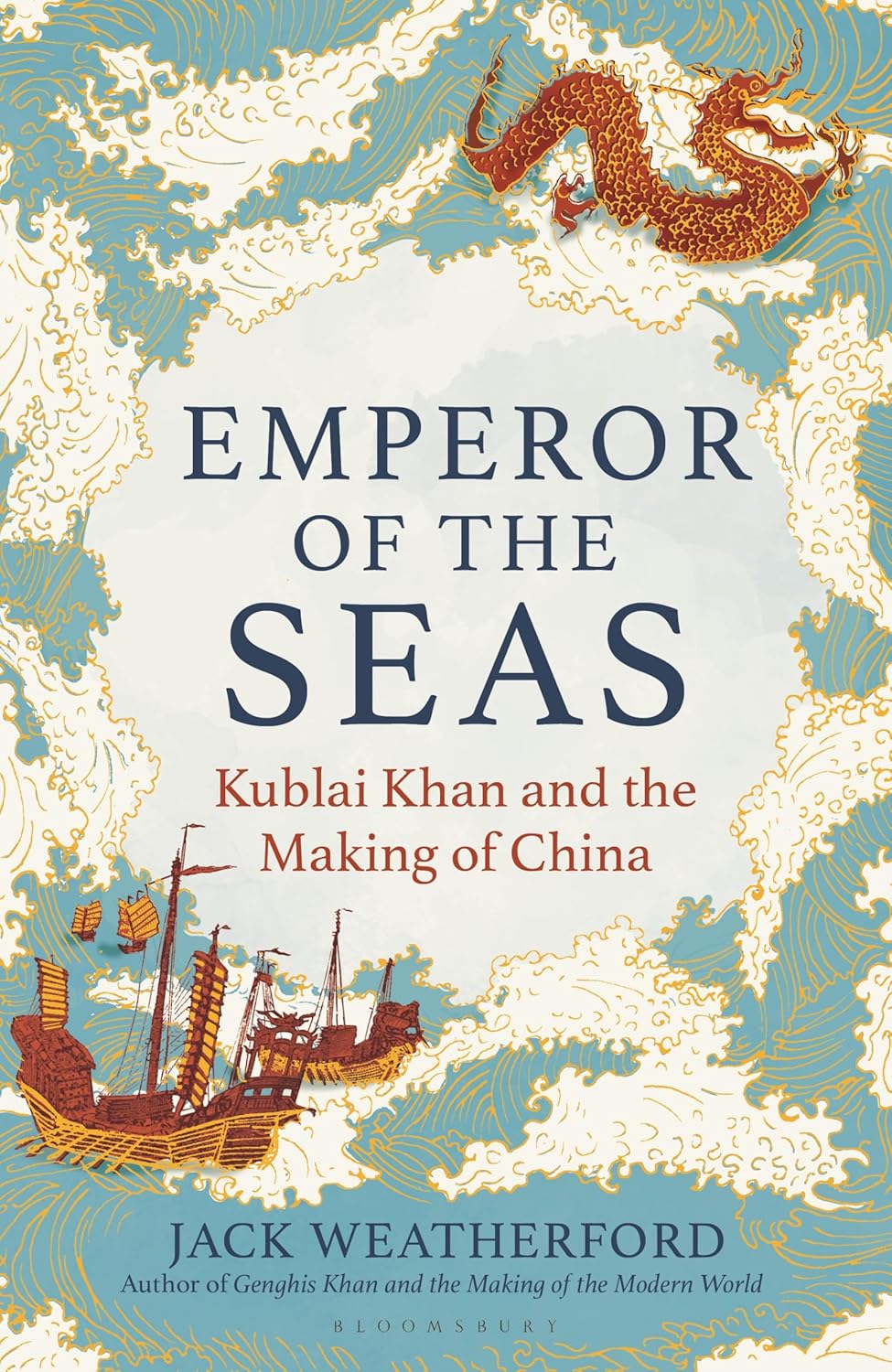
Jack Weatherford’s “Emperor of the Seas: Kublai Khan and the Making of China” now available in hardcover, Kindle, and Audiobook.
 indulge